
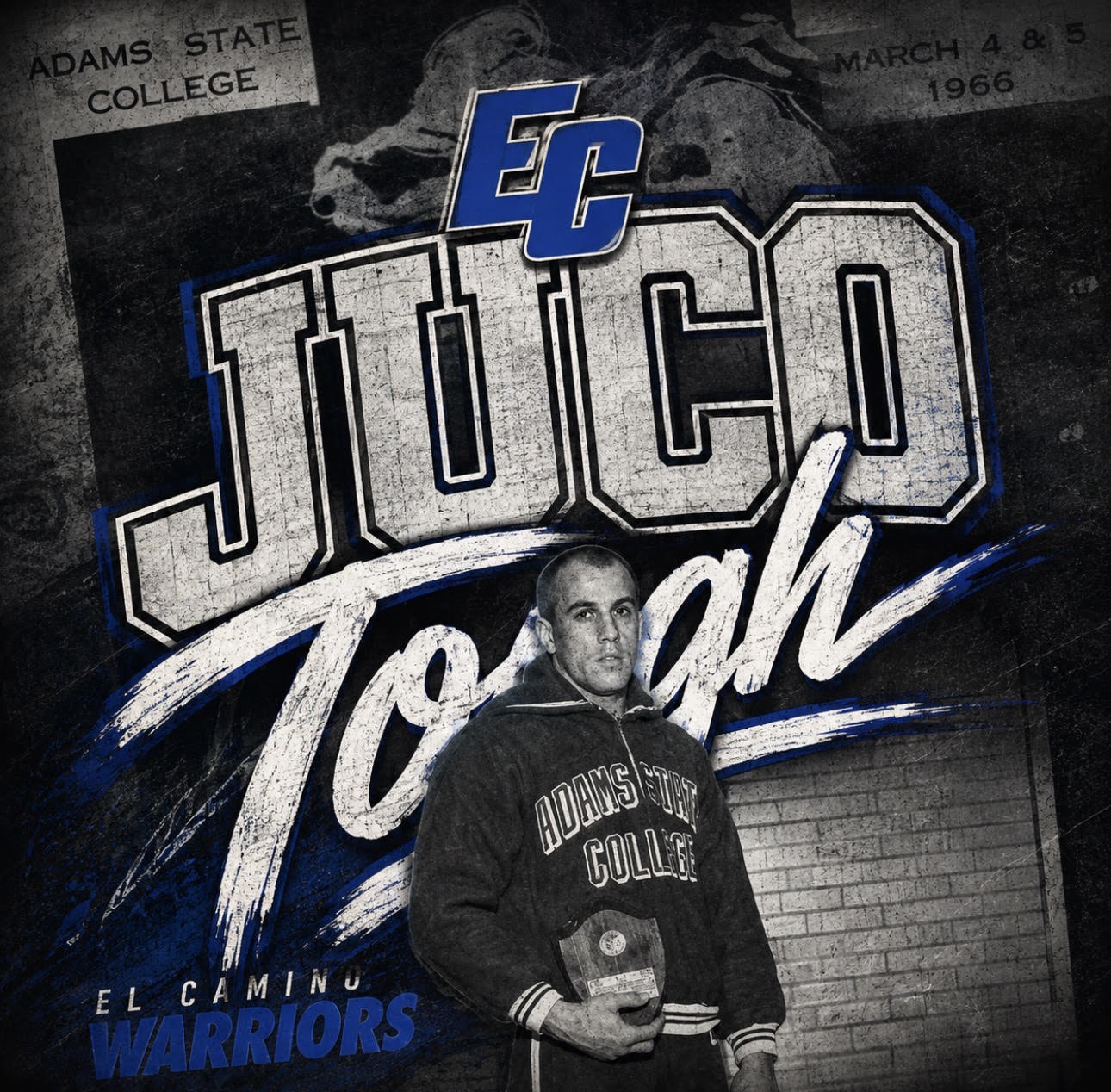

There are certain people whose impact on wrestling cannot be measured simply by the number of championships they won. Their influence can be seen through the athletes they coached, the programs they built, and the generations of wrestlers who were given an opportunity to reach levels they may have never thought possible.
For California wrestling, Bob Anderson is one of those people. Anderson is the originator of the JETS Wrestling Club, short for Junior Elite Training System, which became one of the most influential elite wrestling programs in Southern California. His career as a wrestler, coach, mentor, and international ambassador for the sport has left a lasting mark on wrestling in California and throughout the United States.
I wanted to write this tribute to Bob Anderson after recently beginning to read Dan Henderson’s book, Hendo. Henderson is widely regarded as one of the great wrestlers to come out of California and later left Cal State Fullerton to pursue his Olympic dream. Throughout his story, Henderson speaks highly of both his father and Bob Anderson.
Henderson’s journey included training at Camp Pendleton in San Diego County in California and eventually becoming part of Anderson’s JETS program in San Clemente, California. Anderson provided Henderson with the type of world-class training environment that helped prepare him for the highest levels of international wrestling.
That story is only one chapter of Anderson’s great career.
From South Torrance to El Camino College
What makes Bob Anderson’s story particularly remarkable is that he did not begin wrestling at a young age.
Anderson was born in Oakland, California, in 1943 and was raised in Redondo Beach. He did not begin wrestling until high school, competing for South Torrance High School. By his junior year, he had already established himself as one of the top wrestlers in the area.
As a senior in 1962, Anderson helped lead South Torrance to the CIF Southern Section dual-meet championship final. He also reached the CIF Southern Section individual championship match at 178 pounds.

From South Torrance, Anderson continued his career at El Camino College a junior college in Torrance, California.
His time at El Camino became an important foundation for everything that followed. Wrestling at 167 pounds, Anderson won two 3C2A titles in both the 1962-63 and 1963-64 seasons earning in All-American honors in junior college. He also helped lead the Warriors to a state dual-meet championship and was later inducted into the El Camino College Hall of Fame in 1989.
Anderson has described his time at El Camino as one of the most exciting periods of his development as a young college wrestler.
Those accomplishments established him as one of California’s premier college wrestlers and opened the door to the next stage of his career.
Adams State: Becoming an NCAA and NAIA All-American
Anderson eventually transferred to Adams State College in Colorado, where he continued to compete at the highest collegiate levels.
In 1965, Anderson placed fourth at the NAIA National Tournament in Terre Haute, Indiana at Indiana State, earning his first NAIA All-American honor. That same season, he placed sixth at the NCAA Division I championships in Laramie, Wyoming, becoming one of the first NCAA All-Americans in Adams State wrestling history.
Anderson returned to the NAIA national tournament the following season and earned another All-American honor with a 4th place finish in St. Cloud, Minnesota. Adams State team finished third nationally in 1966, which was the program’s best team finish at the time. He also won a Rocky Mountain Athletic Conference championship and helped Adams State compile an undefeated dual-meet record during his time in Alamosa, Colorado.
His collegiate career was followed by an opportunity to begin coaching at Adams State. In 1967, Anderson became an assistant coach under Frank Powell. Together, they helped lead Adams State to a runner-up finish at the NAIA National Tournament in Lock Haven, Pennsylvania.
The transition from competitor to coach would ultimately become the defining chapter of Anderson’s life in wrestling.
Chasing the Olympic Dream
Anderson continued competing after college and established himself as a serious international wrestler.
In 1968, he won the Western Regional Olympic Trials and the Olympic Trials in Greco-Roman wrestling. Although he never competed in the Olympic Games as an athlete, Anderson became an Olympic alternate in 1968, 1972, and 1976. He continued to compete internationally and nationally.
Anderson won a silver medal in freestyle at the 1971 Pan American Games in Cali, Colombia. In 1974, he won the U.S. National Freestyle Championships in the Open Division in Fort Collins, Colorado. In 1979, he won a gold medal in sambo at the Pan American Games in San Juan, Puerto Rico.
His competitive career did not end with his younger years. In 2003, Anderson became a Masters World Champion in freestyle at 211 pounds, reportedly winning the championship without surrendering a point. In 2004, he earned a silver medal at the World Championships in Greco-Roman wrestling.
Anderson’s career demonstrated something that would become a trademark of his coaching philosophy: he never stopped learning, competing, and challenging himself.
The Start of the JETS
Perhaps Anderson’s greatest contribution to wrestling came when he began developing the Junior Elite Training System, better known as the JETS.
The origins of JETS are especially meaningful. According to the Los Angeles Times in 1992, Anderson initially started the program after looking for a place where his son could train. After being turned away from a full San Clemente Boys Wrestling Club, Anderson began developing his own team. The early JETS program included weekend training sessions at Camp Pendleton before eventually developing into a larger wrestling academy in San Clemente.
What began with a small group of young wrestlers eventually became a national powerhouse.
The JETS program developed elite wrestlers in both freestyle and Greco-Roman wrestling and produced national championship teams all the way through to the senior division. The California Wrestling Hall of Fame credits Anderson’s JETS teams with winning 14 national championships.
The program became much more than a wrestling club. It became a training environment where young wrestlers could be exposed to high-level technique, international competition, and the expectations required to compete at the highest level.
That environment helped produce athletes who would go on to represent the United States on the world stage.
Coaching Olympic Wrestlers and Champions
Anderson’s coaching resume is extraordinary. He coached U.S. World Cup teams, Junior World teams, and U.S. national teams. He was also among the first 10 coaches to earn USA Wrestling’s Gold Coach certification, one of the highest coaching certifications in American wrestling.
As an Olympic coach and mentor, Anderson worked with athletes including Rulon Gardner, Dan Henderson, Heath Sims, and Randy Couture.
Gardner would famously become an Olympic champion. Henderson would go on to become one of America’s most accomplished wrestlers and later a major figure in mixed martial arts. Couture also became an internationally recognized combat-sports champion.
Anderson’s influence therefore extended far beyond one wrestling room.
He helped athletes understand what it meant to compete internationally, and he gave them access to a level of training that could prepare them for the Olympic Games.
Returning Home to Southern California
After years of competing and coaching internationally, Anderson eventually returned to his Southern California roots.
His connection to South Torrance and the South Bay wrestling community remained strong. He continued to work with young wrestlers and share the knowledge he had accumulated through decades of competition and coaching.
South Bay Wrestling Academy owner Chris Gordon described the opportunity for young wrestlers to train around Anderson as something special.
Gordon compared it to a young baseball player having the opportunity to be trained by Cal Ripken Jr.
That comparison captures what Anderson represents and meant to the Southern California wrestling community: a living connection between generations of wrestling.
A young wrestler may walk into the room simply looking to improve their technique. Instead, they have the opportunity to learn from someone who competed at the highest levels of American and international wrestling and who helped coach future Olympians.

A Legacy That Goes Beyond Championships
Bob Anderson’s legacy cannot be measured only through medals or team trophies. It can be measured through the wrestlers he influenced.
It can be measured through the JETS team, program and the national championships it produced. It can be measured through the Olympic athletes he coached. It can be measured through the young wrestlers who were introduced to freestyle and Greco-Roman wrestling because Anderson created an environment where those opportunities existed.
Anderson’s career also demonstrates the importance of California’s junior college wrestling system. His journey from South Torrance to El Camino College, then to Adams State, and eventually to international wrestling and coaching represents a pathway that has helped define California wrestling for generations.
His story is also a reminder that greatness does not always begin at an early age. Anderson did not start wrestling until high school, yet he eventually became a collegiate All-American, international medalist, Olympic alternate, national champion, elite coach, and mentor to future Olympians.
Honoring a California Wrestling Legend
Anderson’s accomplishments have been recognized by some of the most important institutions in the sport.
He was inducted into the El Camino College Hall of Fame in 1989, received the National Wrestling Hall of Fame California Chapter’s Lifetime Service to Wrestling Award in 2009, was inducted into the Adams State University Athletics Hall of Fame in 2015, and was inducted into the California Wrestling Hall of Fame in 2018.
The California Wrestling Hall of Fame specifically recognized Anderson as a two-time El Camino conference champion and 3C2A champion, an Adams State NCAA All-American, National Freestyle Open champion, Sambo champion, Olympic coach, World Cup coach, and creator of the JETS Wrestling Club.
Those honors tell only part of the story. The more important legacy is found in the wrestlers who came through his programs and carried his teachings into the next generation.
Bob Anderson is a champion, coach, mentor, and teacher. But perhaps the most fitting way to describe him is as a builder.
He built wrestlers.
He built teams.
He built the JETS.
And, most importantly, he helped build the future of California wrestling. For those reasons, Bob Anderson deserves to be remembered not simply as a great wrestler or coach, but as one of the foundational figures in the development of elite wrestling, especially in Southern California.
Bob Anderson is the originator of the JETS — and his influence continues to live on through the wrestlers and coaches who followed his path.
Photo Courtesy: Adams State University Library, Yearbook collection, California wrestling archives, and USA Wrestling collection.


Leave a Reply