
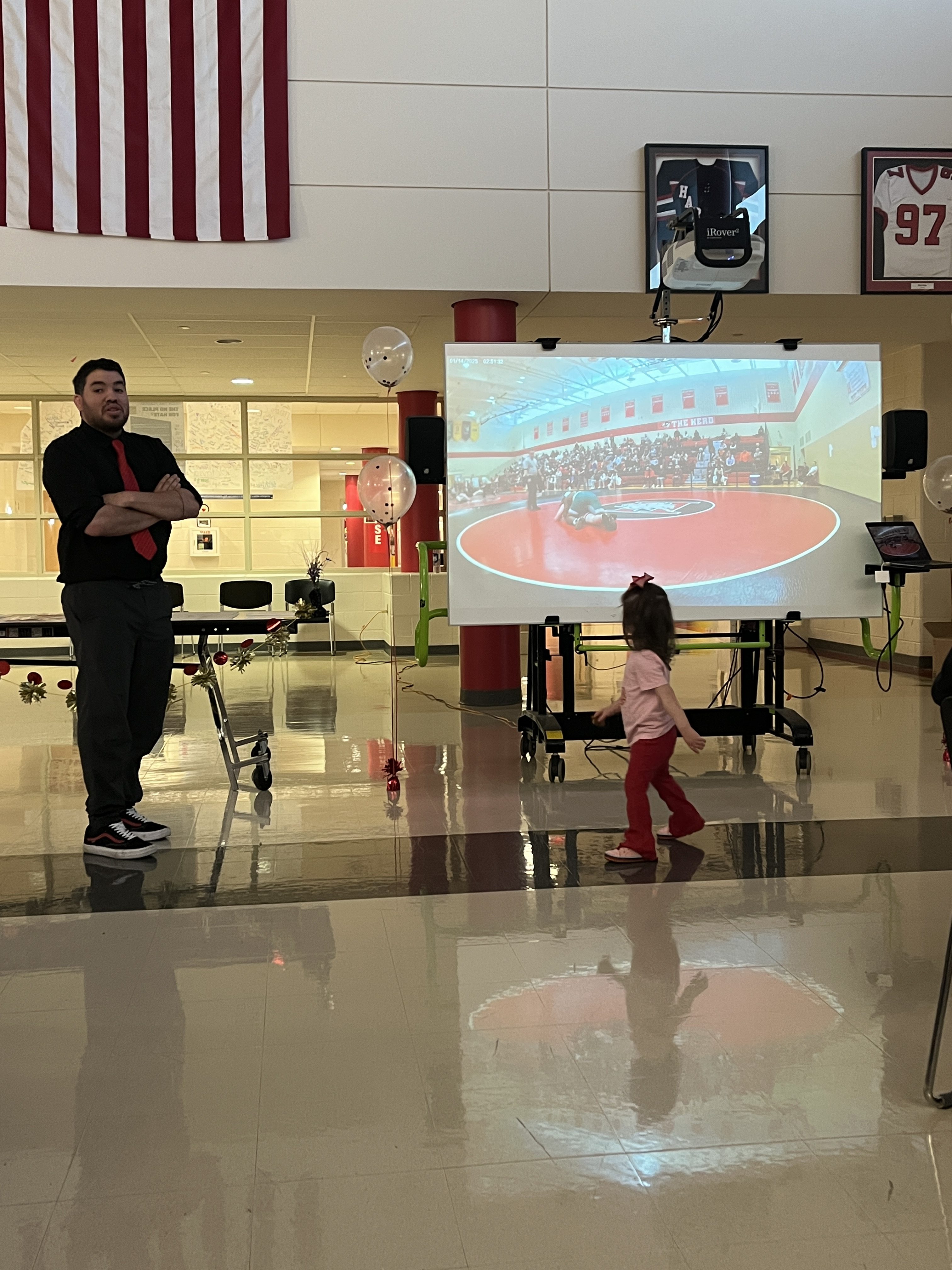
When your last name carries weight in the wrestling community, expectations are set before you even step on the mat. For Eric Ochoa, the son of Hall of Fame coach David Ochoa, that pressure could have been suffocating. Instead, he used it as fuel to carve out his own path—from the fierce high school circuit of California at Northview High School, to the collegiate mats as a Division I athlete at Drexel University, and now as the head coach of Harriton High School and the Main Line Wrestling Academy (MLWA) in Pennsylvania.
Today, Ochoa is building a new legacy on the East Coast. He is blending his California roots with the physical, fundamental grind of Pennsylvania wrestling, all while navigating the chaotic but rewarding balance of being a husband and father.

The Weight and Wisdom of the Ochoa Name
Growing up under the tutelage of a Hall of Fame coach, many assume the dynamic between father and son was entirely consumed by the sport’s intensity. But for Ochoa, his father’s most important lessons transcended wrestling.
“My dad has always told me and asked me to live by one philosophy: ‘Just do your best,’” Ochoa explains. “My father is the hardest working man I have ever met. It’s very easy for me to do the things I had to do growing up, and now as a man and father, because that was who I had to model myself after.”
He notes that his father—who doesn’t drink or smoke—is relentlessly passionate about his craft and helping his community. While the balance of having his dad double as his coach was tough early on, things have smoothed out now that both men work in common fields.
Carrying the Ochoa name initially felt like having the weight of the world on his shoulders, but it eventually transformed into a psychological weapon. “At some point, when I decided that I had my own personal goals and aspirations in the sport, none of that mattered. In fact, at some point it became a boon for me, knowing that I had two things going for me: that ‘N’ across my chest and my surname to shake my opponents before they ever stepped on the mat.”
The Northview Foundation and Peaking for March

Ochoa was a two-time state qualifier coming out of Northview High School, a powerhouse program with a dedicated coaching staff. Peaking for the postseason runs to Bakersfield required absolute trust in the system.
“Something I try to explain to my kids at Harriton or at my club all the time is that ‘I can open the doors for you, but you still have to walk through them,’” he says.
He credits the system at Northview, specifically coaches Caleb Flores and Bobby Bellamy, for his development. Flores meticulously managed his season plans and weight cuts, keeping him accountable when it was time to drop down late in the year. Bellamy, meanwhile, understood him beyond his lineage.
“Bobby understood me, Eric Ochoa, not as my father’s son or as anything else. He got to the core of who I was as a wrestler, and he developed ME as who I was going to be. That philosophy of developing relationships and going above and beyond to understand my own athletes… has helped me immensely.”
The Leap to Division I at Drexel

Moving from California to wrestle Division I at Drexel University required a massive shift in accountability and routine. It was a wake-up call to the reality of the student-athlete grind.
“The routine of everything… if you truly want to be a D1 athlete, your life is school and your sport. Point blank, full stop,” Ochoa notes. His grueling daily cycle left no room for error: wake up, morning run, morning practice, shower, classes, lunch, lift, homework, bed, and repeat.
“In high school, you have teachers that will work with you and will go out of their way to contact people if you are struggling. But in college, professors and admins do not care if you choose not to do something. Everything is on you. You are fully accountable for your own actions, and that part of it is definitely hard.”
He also noticed a stark difference in the wrestling styles between the two coasts. While California produces incredible outliers and elite top-tier talent that can compete with anyone, Pennsylvania’s depth of fundamentals stood out.
“To me, what I think Pennsylvania does really well is they have a lot of people whose fundamentals are just off the charts. I would say the average varsity athlete from Pennsylvania, at least in our area, could be dropped anywhere in the country and perform very well. In California, I think we are still developing that foundational wrestling.”
Blazing His Own Trail at Harriton
Now at the helm of Harriton High School and MLWA, Ochoa is integrating his father’s philosophies while forging his own distinct coaching identity. Harriton’s demographic is highly academic and white-collar—a stark contrast to the rugged, raw environment of Northview.
“I do not have to approach the sport as rugged or as raw. A lot of things I have realized coaching here is that each kid is different. Just finding ways to understand each of those differences and pull each of those styles out of each individual athlete has been very rewarding so far.”

Wrestling in Pennsylvania means navigating a notorious meat grinder, facing perennial powerhouses like Council Rock South, Boyertown, and Central Bucks West week in and week out.
“It is definitely a double-edged sword,” Ochoa admits. “I have had some very young teams… oftentimes it does feel like I am feeding a lot of these kids to the wolves. But luckily, as I have discovered, these kids are resilient.”
To survive the gauntlet, Ochoa reminds his athletes that wins and losses are just lessons. Winning in November means very little if they can’t maintain the momentum into March. He also balances the physical toughness of the sport with genuine enjoyment.
“We definitely grind and work hard, but we also find ways to have fun, whether playing games for warm-ups, telling jokes, or picking funny music. Taking the time to get the kids to enjoy what they are doing and becoming students of the sport helps a lot when it’s time to ask them to do the hard stuff.”
Setting the Standard: The Impact of Leadership
A major catalyst for Harriton’s evolving culture is athletes like Boden (“Bodie”), who recently made a great run to the section finals and became a MAWA Eastern Nationals All-American over the summer.

“Bodie… might be the single hardest working athlete I have ever worked with, and it surely doesn’t come from me,” Ochoa praises. “What I have seen is him bust his butt day in and day out, and having challenged and pushed himself to every limit he could find. That whole series to me, and hopefully to him, proved that he belongs up there with some of these kids that he thought were going to beat him.”
As the youngest captain Ochoa has ever named for the upcoming season, Bodie’s influence is already paying dividends. He attracts more kids into the wrestling room, breeding competition and camaraderie. The game plan for Bodie this year is simple: “The kid has fun when he’s being a badass, so go be a badass.”
Ochoa also credits his last group of seniors—who are now collegiate students at Columbia, Penn State, and Lehigh—for laying the foundation and modeling that extra level of commitment, whether it was off-season club work or running extra sprints after practice.

Main Line Wrestling Academy and Defining Success
With the Main Line Wrestling Academy, Ochoa’s focus expands heavily into youth development. For young wrestlers stepping onto the mat for the first time, he emphasizes four core foundational habits:
- Be Curious: Ask questions and get answers.
- Be Courageous: Don’t be afraid to embarrass yourself if it means you will learn and get better.
- Be Consistent: Show up and put the work in regularly.
- Be Committed: Dedicate yourself to the process.

Because he works with athletes across different skill levels, Ochoa defines a “successful” season differently for everyone.
“Whether that is a JV backup who just was forced into a lineup due to sickness winning a varsity match and then stepping up late in the season and winning a match at Districts… or someone like Bodie who outdid himself and really proved he can break through the ceiling,” Ochoa says. “For me, I think watching these kids surprise themselves is the best part as a coach.”

The Village That Makes It Possible
Surviving the constant travel and the grind of running both Harriton and MLWA requires a strong anchor at home. For Ochoa, that anchor is his wife, Maya, and their two daughters.
Maya has been instrumental in his coaching journey. She found him his initial assistant job at Harriton and gave him the full support he needed to quit his previous job to take the MLWA full-time.
“Without her, I would never be able to do anything that I am doing now,” Ochoa shares. “And my daughters give me levity when stuff is getting out of hand. It’s nice to come home and know that my little girls will still want me to hold them or just sit on the couch.”
Reflecting on his journey from the mats of Northview to building a wrestling empire in Pennsylvania, Ochoa is exactly where he wants to be.
“I am the luckiest guy in the world. I get to do what I love with the people that I love, and I am surrounded by a village of people who support me, and I wouldn’t change anything for the world.”
Leave a Reply